

The Testing Phase
Thereafter, it was necessary to put the modules into practice and get feedback about any issues arising.
However, containment responses to the threat of COVID-19 produced one obvious damper on the continuing development of the program at UC and elsewhere.
The advent of COVID-19 and various other problems made it difficult to proceed further with the predetermined timetable for the implementation of the project. Thus the Ministry of Education, Youth and Sport (MoEYS) decreed that all educational institutions had to shut down on the 14th March, 2020. Whilst this was subsequently relaxed with certain provisos, these were only more-or-less completely relaxed in mid-April, 2022. As a result, UC could only open up for physical classes with the start of the second term of Academic Year 2021-2022, and then mainly only to undergraduate students in their Foundation Year.
Thus, as a result of the world-wide disruptions caused by the pandemic, the time-line for the project was extended by 9 months until November 2022, in the hope that the need for precautionary measures such as travel and institutional restrictions would be relaxed.
A Virtual First Train-the-Trainers Workshop The original plans included a trial run of the TTTW component in Cambodia scheduled for 23-25 June 2021, followed by a repeat run in Sri Lanka a couple of weeks later. Travel restrictions precluded face-to-face workshops over the three days so it was decided to run virtual test-drives rather than postpone physical trials to an unknown later date.
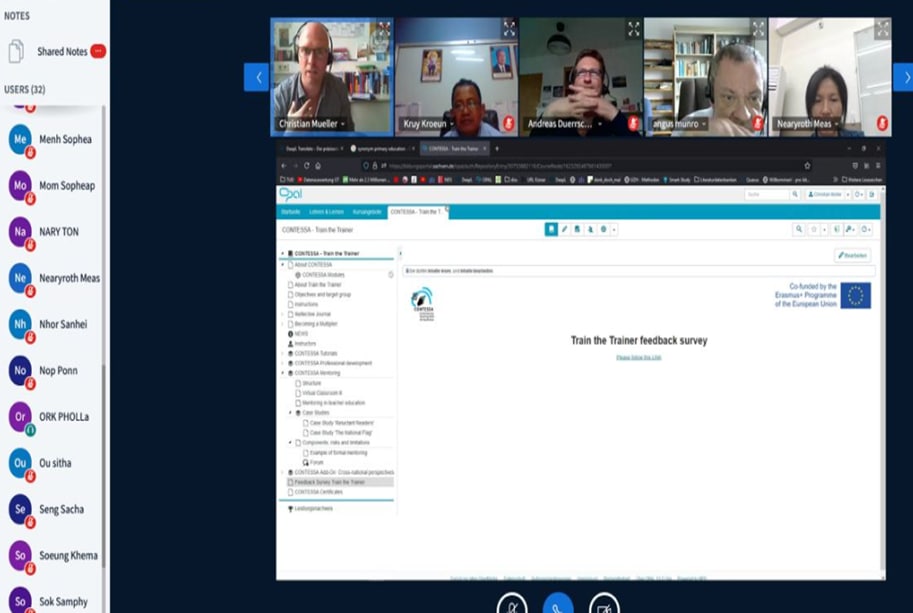
Three afternoons-only on-line sessions were run. Fifteen participants were selected by each of PUC and UC and included a cross-section from education faculty, teaching staff of selected regional teacher-training centres and selected primary school teachers.
- First Mirjam Brodacz-Geier of UG provided an overview of the structural approach of the CONTESSA project, including the concept of producing a ‘reflective journal’ to document their initial thoughts and updates about what constitutes good teaching practices based on insights from the material covered in the workshop.
- Thereafter, Andreas Dürrschmidt of TUD led a workshop on Professional Development through increasing participants’ knowledge and understanding of different teaching strategies in response to various challenges originating within and outside the classroom. This included a case study developed by PUC on ‘Having a Hard Time’, on how to counsel students confronted with financial problems.
- Mentoring was the focus of the final afternoon, led by Christian Müller (TUD). After his overview of what can fall under the term ‘mentoring’ and various downstream aspects, participants were asked to join randomly assigned groups to discuss a case study related to the problem of dyslexia, ‘Reluctant Readers’, developed by the UC team.
A Follow-Up Physical Train-the-Trainers Workshop The relaxation of travel restrictions made it possible for a follow-up trial run of the TTTW in Cambodia and Sri Lanka. Andreas Dürrschmidt and Christian Müller could thereby oversee these in person; together with Dr. Thomas Köhler, also from TUD, to provide any guidance and assistance on the use of the software in our e-learning centres where the sessions were conducted at the end of April. The workshops followed the same structure as in the virtual trial run, with one day at PUC and the second at UC. They were positively received by students.
In addition, the TTTWs have been tested out on students and faculty with constructive, generally positive feedback.
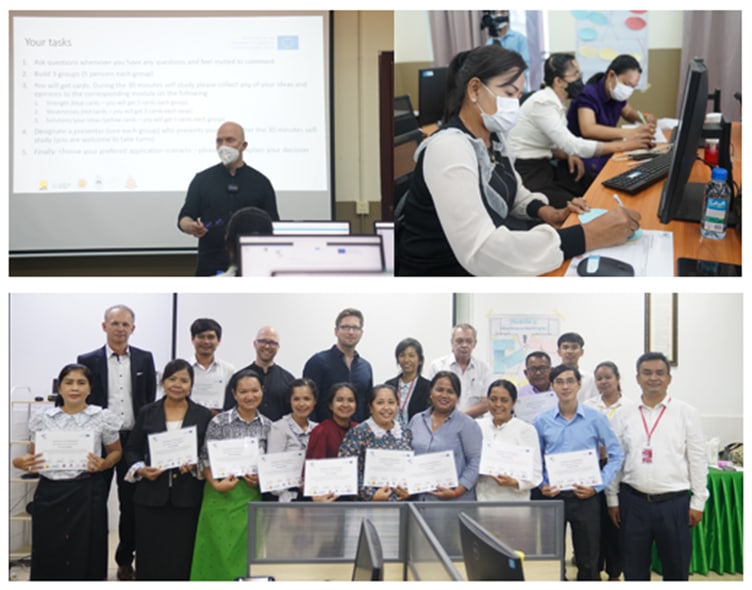
Incorporation into Degree Programs With MoEYS having relaxed conditions for the opening of physical classes in late April, UC opened up physical classes for Foundation Year students. In addition, as a special dispensation, such classes were also allowed for the course EDC404 (The Uses of ICT in Education) to make use of the E-Learning Centre to facilitate including Module 5 (Digital Teaching and Learning) into the curriculum.
- Teething problems with the existing course structure and the available Khmer translations precluded full implementation of the module.
- Those regarding the Khmer translation of this and other modules have since been resolved.
- The possibility of supplementary extracurricular short on-line courses to bring UC students up to speed on the use of basic software such as Word and PowerPoint is being actively pursued.
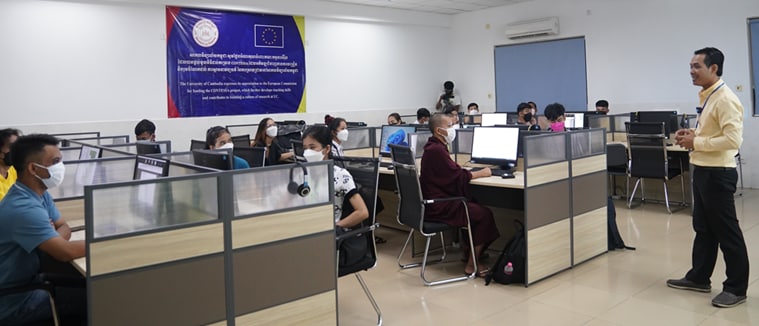
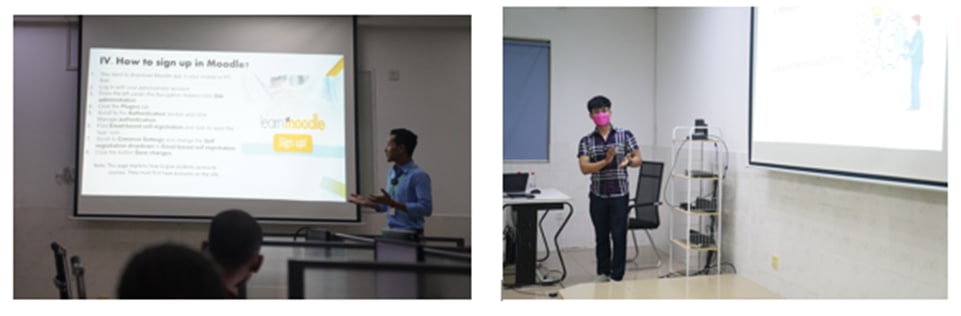
Based on our experience with the incorporation of CONTESSA material in to EDC404 and the subsequent updates of the Khmer translations of the five modules, we are in the process of detailing how these can be actively incorporated into relevant courses in the UC’s College of Education.
- This is under the final stages of implementation for the next edition (2023-2027) of the UC Undergraduate and Graduate Studies catalogs.
Thus the first steps have been successfully completed on the road towards sustainability